2018年10月23日星期二

Principles for selection of sewage treatment processes

1. The main technical and economic indexes of process selection include: treatment of unit water investment, reduction of unit pollution investment, treatment of unit water consumption and cost, reduction of unit pollutant power consumption and cost, occupation of land, operation performance reliability, management and maintenance of the degree of difficulty, overall environmental benefits and so on.
2. Urban wastewater treatment technology should be selected according to the treatment scale, water quality characteristics, environmental functions of the receiving water body, local actual conditions and requirements, and selected after comprehensive technical and economic comparison.
3. It is necessary to determine the influent water quality of sewage, optimize the parameters of process design, and make a detailed investigation or determination of the current water quality characteristics of sewage, and make a reasonable analysis and prediction. The composition of water quality is complex. When special, the dynamic test of sewage treatment process should be carried out, and the pilot study should be carried out if necessary.
4. The new process should be adopted actively and prudently. For the new process that is applied for the first time, it must pass pilot test and production test, and provide reliable design parameters before application.
5. In the construction of the same sewage plant by stages, the same process should be adopted in each stage, and the construction scale of each stage should be the same as possible.


2018年10月22日星期一

Technology of waste Water Recycling and treatment in Printing and dyeing Industry

Printing and dyeing industry uses a large amount of water.Usually,the water consumption of 1 ton of textile for each printing and dyeing process is 100 ~ 200 tons, of which 80% of the dyeing wastewater discharged. Commonly used printing and dyeing wastewater treatment methods are recycling and harmless treatment.

Recycling is divided into three aspects:

1. The wastewater can be recycled according to the characteristics of water quality, such as bleaching and cooking wastewater and dyeing printing wastewater can be recycled separately, the former can be used for convection washing.

2. The recovery and utilization of alkali liquor is usually recovered by evaporation method. If the amount of alkali liquor is large, it can be recovered by evaporation. The amount of alkali liquor is small and can be recovered by evaporation of film.


3. The recovery and utilization of dyestuffs, such as the acidizing of the sulphide acid, colloidal particles, suspended in the residual solution, and recovery and utilization after precipitation and filtration.


There are three different methods for the innocuous treatment of printing and dyeing wastewater:

1. Physical treatment including precipitation and adsorption, and so on. The precipitation method is mainly used to remove the suspended matter in the wastewater, and the adsorption method is mainly used to remove the dissolved pollutants and decolorization.

2. Chemical treatment including neutralization, coagulation and oxidation, etc. The neutralization method can adjust the PH of wastewater and reduce the chroma of wastewater。The coagulation method is to remove disperse dyes and colloids from wastewater.The oxidation method is to oxidize the reducing substances in waste water and precipitate vulcanized dyes and vat dyes.


3. Biological treatment including activated sludge, biological turntable, biological drum and biological contact oxidation, etc. In order to improve the effluent quality and meet the discharge standards or recovery requirements, it is often necessary to adopt several methods of combined treatment.


Related reading:High Quality Wastewater Treatment

2018年10月18日星期四

How SCR technology works?

AdBlue  DEF is a consumable that must be used in SCR technology.


SCR technology uses a catalyst system can effectively reduced the emission of nitrogen oxides and solid particles produced by diesel engines into nitrogen and water.The main components of the SCR system include the catalyst, the AdBlue injection unit, the urea tank and the AdBlue dose controller.
Guangzhou EverBlue Chemicals Co., Ltd.
Process of SCR technolog : the urea tank automatically ejects the AdBlue (diesel exhaust fluid ) when nitrogen oxides are found in the exhaust pipe and the oxidation-reduction reaction of AdBlue and nitrogen oxides in SCR catalytic reaction tank produces non-pollution nitrogen and water.

With the intelligent control of SCR system, the car will be unable to start when the AdBlue in the urea tank is insufficient .In order to ensure the normal running of the vehicle, there should be sufficient AdBlue for the vehicle.

2018年10月12日星期五

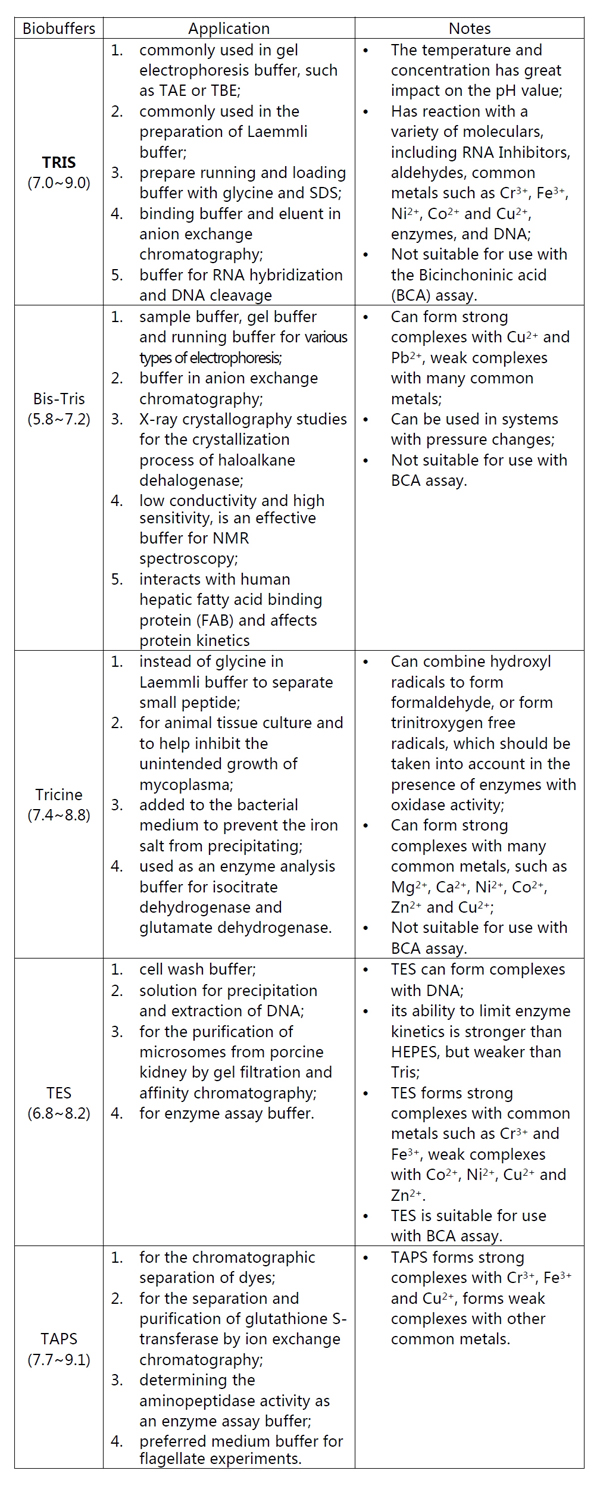
TRIS, Bis-Tris, Tricine, TES, TAPS, What is the difference in application?

TRIS(Tris(Hydroxymethyl)Aminomethane), Bis-Tris, Tricine, TES, TAPS are buffers commonly used in biochemical experiments and molecular biology experiments, and they all contain the structure of TRIS. Then what are the differences in application between these buffers?

We hope that the following table could solve your doubts.

Table 1. The application of TRIS, Bis-Tris, Tricine, TES, TAPS

In specific use, buffers containing the TRIS (CAS:77-86-1) structure will form a strong or weak complex with a variety of metal ions, so the stability constant should be taken into account. In addition, the buffer range and the appropriate type of experiment also should be considered in order to obtain the best experimental results.


2018年9月21日星期五

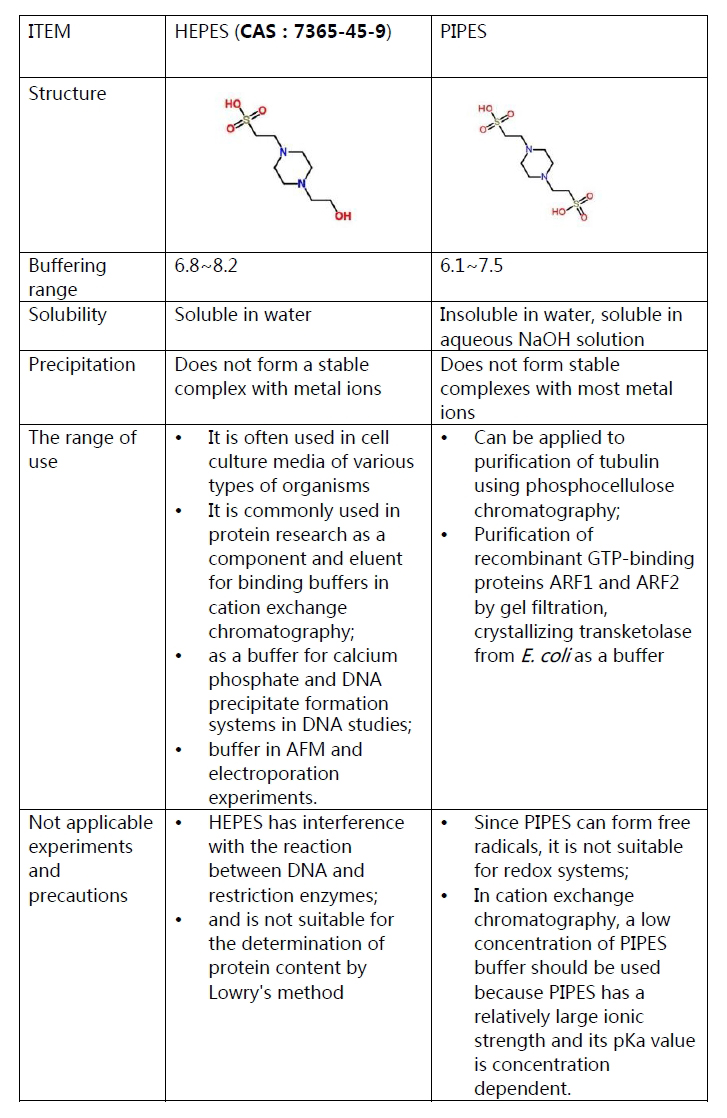
HEPES and PIPES buffer, what differentiates them?

In biochemical experiments, buffer solution plays an indispensable role, it can resist the influence of a small amount of strong acid and alkali and maintain the pH value closest to the physiological environment for the system. HEPES (4-(2-Hydroxyethyl)-1-piperazineethanesulfonic acid) buffer and PIPES buffer are both commonly used in biological experiments, both of which are Good's buffers and have similar structures. Many people often have doubts: Besides the structure, what is the difference between them?

Similarities between HEPES and PIPES buffers

HEPES and PIPES buffers, even all Good's buffers, have the following characteristics:
(1) pKa value between 6.0 and 8.0;
(2) High solubility in water;
(3) Membrane impermeability and not easy to penetrate biofilm;
(4) Limited impact on biochemical reactions, chemical and enzymatic hydrolysis, and no complex or precipitation with metal ions;
(5) Very low absorption of visible light and ultraviolet light;
(6) Ion concentration, solution composition and temperature have little effect on dissociation;
(7) Not participate or interfere with biochemical processes

What is the difference between them?


In summary, both HEPES buffer (CAS 7365-45-9) and PIPES are Good’s buffers, which do not form stable complexes with metal ions and are suitable for solution systems containing metal ions. However, there is also a certain difference between them. Therefore, when selecting the above buffer, we need to comprehensively consider the suitability of the experimental system and the difference in the nature of the two.


Comparison of the Buffer Range Between MOPS and Other Buffers

The Good's Buffer is a series of N-substituted sulfamic acids that have good pH stability and are inert to a variety of chemicals and enzymes. 3-(N-morpholino)propanesulfonic acid, referred to as MOPS, is one of Good's Buffer, it plays a very important role in the biological experiments.

What are specific experiments MOPS used in?

The buffer range of MOPS is between 6.5 and 7.9, which is

(1) Suitable for the study of electron transfer and phosphorylation of the chloroplast thin layer;
(2) Can be prepared into a variety of agar medium and used as a non-toxic buffer in Streptomyces culture and cephalosporin production, and Lysis buffer that can be used for Escherichia coli cells;
(3) Can be used as electrolyte system components for isoelectric focusing electrophoresis (IEF) of two-dimensional gel electrophoresis;
(4) Can be used in Northern hybrid, as RNA separation and membrane buffer;
(5) Can be used for bicinchoninic acid (BCA) assay.

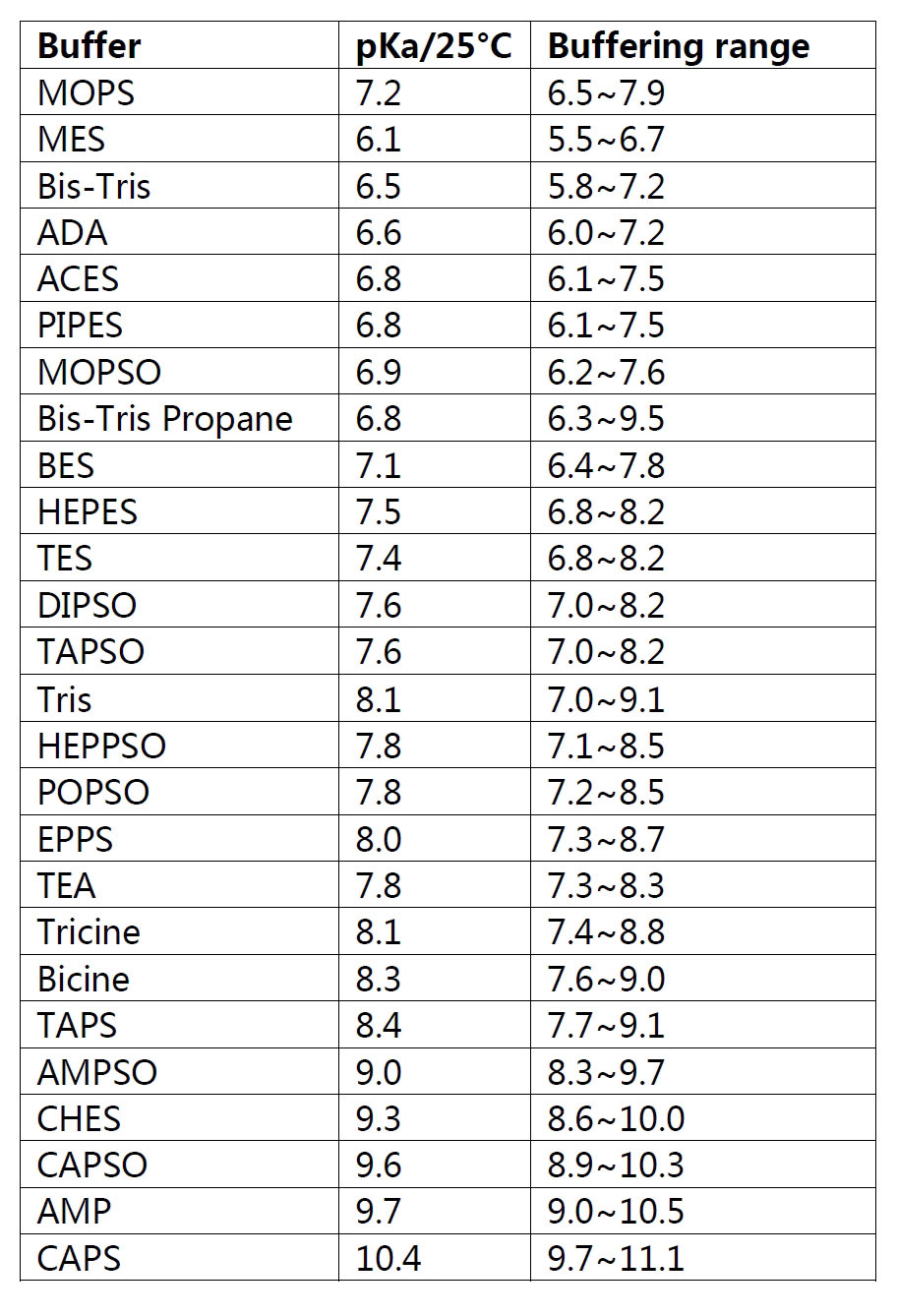
Comparison of the buffer range between MOPS (CAS 1132-61-2) and other buffers:

Table 1. The buffering range of MOPS and other buffers.

How to prepare the MOPS buffer?

The preparation method of commonly used 10× MOPS buffer is as follows:

1. Add 41.8g MOPS in 1L beaker;
2. Add about 700mL DEPC to stir and dissolve MOPS;
3. Use 2N NaOH to adjust the pH to 7.0;
4. Add the following reagents to the solution: 20mL of 1M NaOAc (DEPC treated), 20mL of 0.5M EDTA (pH 8.0) (DEPC treated), EDTA has a good complexation effect for the divalent, trivalent metal cations, and can effectively reduce the concentration of free metal cation ion. It also can make the pH stable; EDTA can also be used to suspend some of the enzymatic reaction;
5. Set the solution to 1L with DEPC treated water;
6. Remove impurities with 0.45μm filter;
7. Store at room temperature.

MOPS buffer is a zwitterion buffer, if the usage amount is small, it should be properly split charging. For safety and health, experimenter should wear clothing and disposable glove. If accidentally contact with the eyes, the operator should immediately rinse with plenty of water and seek medical attention.


2018年9月7日星期五

Preparation Of Graphene Using Guanidine Hydrochloride As Reducing Agent

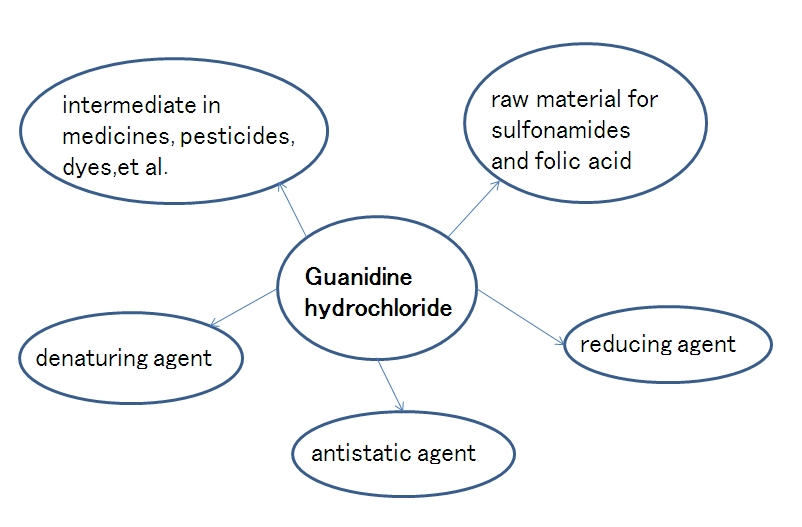
Guanidine hydrochloride, which is often used as an intermediate in medicines, pesticides, dyes and other organic compounds, is an important raw material for sulfonamides and folic acid; it can be used as a strong denaturants in the extraction of total RNA from cells, and used for denaturation and complexation of proteins. It can be used as an antistatic agent for synthetic fibers. In addition, it can also be used as a reducing agent to prepare graphene.

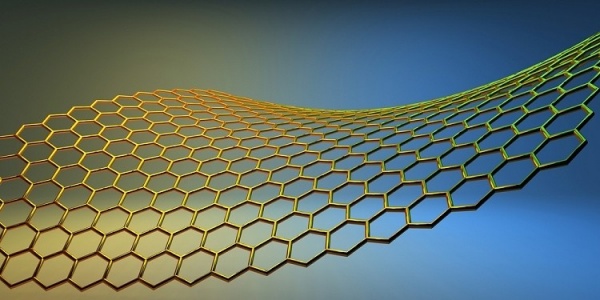
Graphene is a two-dimensional crystal composed of carbon atoms with only one layer of atomic thickness. It is an ultra-thin material with high strength and toughness. It has a large breaking strength which is 200 times more than steel. It has 20% stretching range and excellent electrical conductivity.

Due to its unique quantum effect and excellent electrical, thermal and mechanical properties, graphene has broad application in nanoelectronic devices and integrated circuits, flexible electronic devices, ultra-high sensitive sensor devices and other new electronic devices, composite materials, solar cells, super capacitors, hydrogen storage materials, etc.

The Existing Preparation Method

At present, preparation methods of graphene mainly include physical mechanical stripping method, vapor deposition method and chemical method. Mechanical methods include micro-mechanical stripping methods, epitaxial growth methods and heating of SiC. It is difficult to prepare graphene with large area and uniformly thick.

Compared with physical methods, chemical method for preparing graphene has a high yield. It has the advantages of simple preparation method, low cost and large-scale production, and thus becomes a common method for preparing graphene. However, in the reduction of graphene oxide, the selected reducing agents are mainly hydrazine hydrate and its derivatives, NaBH4, p-phenylenediamine, sulfur compounds, etc. Most of the reducing agents are toxic and explosive, which is not conducive to large scale production.

Therefore, it is necessary to develop a simple, efficient, low-cost and environmentally friendly method.

The researchers developed a method for preparing graphene with guanidine hydrochloride (CAS 50-01-1) as a reducing agent [1]:

(1) Dispersing graphene oxide in water, treating with a cell disrupter for 20~90min and then continuing ultrasonic for 10~60min to obtain a uniformly dispersed graphene oxide with a concentration of 0.1~10mg/mL;
(2) Adding soluble polymer (one of polyvinylpyrrolidone, polyacrylamide, polyvinyl alcohol, polyethylene glycol, hydroxymethyl cellulose, polyacrylic acid) to the graphene oxide dispersion, ultrasonic dispersion 5~30min, a mixed solution of polymer and graphene oxide is obtained, and the mass concentration of the soluble polymer in the mixed solution is 0.01~0.1 mg/mL;
(3) Adding guanidine hydrochloride to the above mixed solution, the mass ratio of guanidine hydrochloride to graphene oxide is 10:1~100:1, and adding alkaline solution (10%~28% ammonium hydroxide, 0.1~5mol/L NaOH solution, 0.1~5mol/L KOH solution) to adjust the pH to 8~12, stir in the oil bath (60~100°C), the reaction time is 1~5h. The water-soluble graphene is obtained by centrifuging and washing.

The preparation method has the advantages of simple preparation process, low equipment requirement, and easy preparation of graphene in large quantities; the presence of the soluble high molecular polymer greatly improves the water solubility of the graphene, and is also beneficial to the further preparation of the graphene film. Guanidine hydrochloride (Guanidinium chloride) can be used as a reducing agent to prepare graphene which can be stably dispersed in an aqueous solution, and the prepared graphene can be used for constructing sensor and electrical device.

Reference

[1] Ma Qi, Song Jinping, Guo Yong, et al. A method for preparing graphene with guanidine hydrochloride as a reducing agent. CN104261393B, 29 June 2016.